

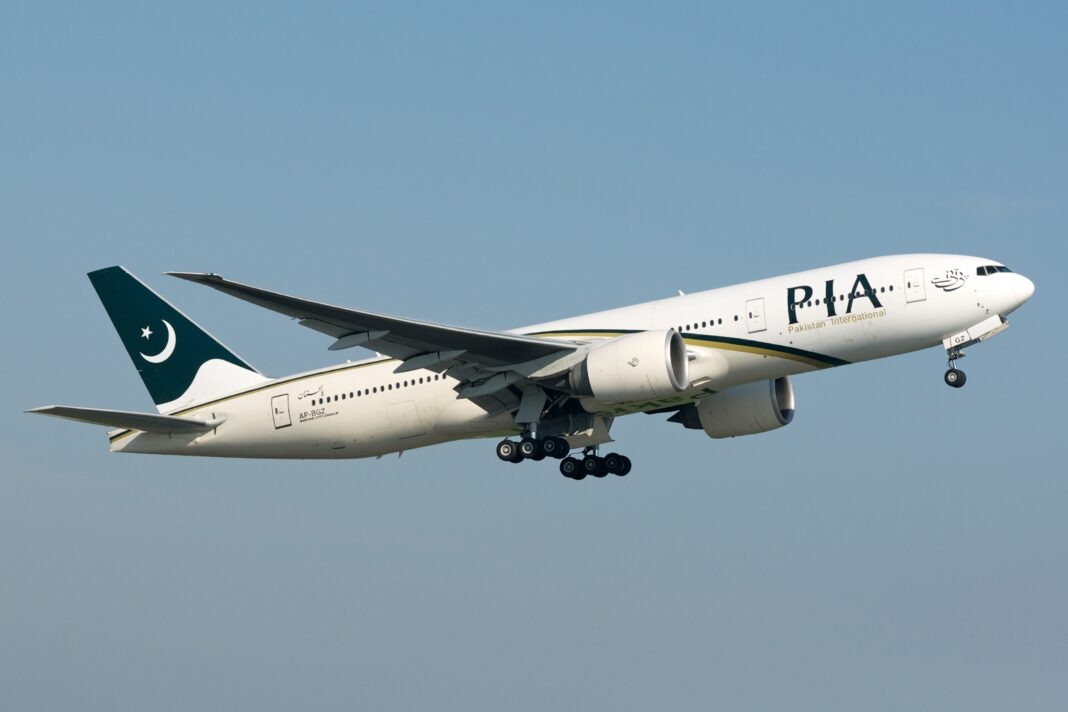
Pakistan International Airlines, the country’s flag carrier, has finally been privatized after years of persistent losses. Is this a good deal for the government, and its people? I’ll start with the transaction’s financials - what was sold, what cash changed hands, and what liabilities stayed behind - before turning to the final answer.
What did the government get?
Not all of “legacy PIA” was privatized. Before the sale, the state split the airline into two entities. A holding company absorbed most of the old financial baggage—roughly Rs650bn in net legacy liabilities. The operating airline retained the aircraft, routes, and day-to-day business. It is this airline company that the government sold to private investors; the holding company remains with the state.
The 2024 accounts make the motivation for the carve-out plain. The holding company was designed to absorb enough of PIA’s legacy liabilities so that the operating airline - the entity being sold - generated a modest operating profit in 2024. That was not cosmetic: it was the prerequisite for any serious turnaround.
Privatization only works if the buyer has a credible path to creating value. PIA, as it existed, suffered from a classic debt-overhang problem: even if new management improved performance, much of the incremental cash flow would be swallowed by servicing old obligations. In that world, the rational response is to underinvest, cut corners, and limp along. By separating the legacy balance-sheet burden from the operating airline, the government improved the buyer’s incentives - and, in principle, the odds that operational reforms translate into investable returns.
The government sold 75 per cent of the operating airline under a structure that combined a small cash payment to the state with a much larger capital infusion into the company. Roughly Rs10bn arrives as cash proceeds to the government, while about Rs125bn is injected into the airline as new equity to recapitalize the business. On the implied valuation, the state retains a 25 per cent stake worth about Rs45bn. Taken together, the government’s immediate “value” from the transaction is therefore about Rs55bn - roughly Rs10bn in cash and Rs45bn in equity.
What the government will not get
Some commentators have celebrated the sale as if privatizing PIA automatically stops the fiscal bleeding. It does not. The state still retains the holding company—and with it roughly Rs650bn in legacy net liabilities.
Put differently, the government walks away with about Rs55bn in value from the transaction, but it also keeps roughly Rs650bn of legacy obligations. Netting the two leaves a balance-sheet hole of about –Rs600bn. The minus sign matters. And even at a conservative 10 per cent average cost of capital, servicing that legacy burden implies roughly Rs60bn a year in financing costs. The government will continue to pay for the dysfunctions of the past - privatization or not.
Looking forward
A cynic might look at these numbers and conclude that privatization is just rearranging the deckchairs. But that is too harsh. This deal is a step in the right direction: it removes the debt-overhang problem from the operating airline, and puts it under new management with an incentive to perform.
What about the roughly Rs600bn of liabilities the government is still carrying? The first lesson is to avoid the sunk-cost fallacy: past mistakes should not prevent better choices today. Stripping the airline of legacy debt and letting it operate in a more normal market environment was the right move—even if it does not erase the old bill.
The second lesson is that the state remains, in effect, a shareholder in the broader economy. When firms expand, the government participates through the tax system: higher payrolls, more sales, and—eventually—profits translate into higher revenues. The best case after privatization is therefore not that the Rs600bn vanishes, but that a healthier aviation sector grows fast enough to help pay it off over time.
What worries me
Pakistan has privatized before—banking is the obvious example—yet growth has steadily slowed in the years since. That does not mean privatization “failed,” but it does underscore a harder point: ownership changes are not a substitute for a broader environment that rewards investment, competition, and productivity. Without that ecosystem, privatization becomes a transaction, not a transformation.
The PIA carve-out followed the right logic: separate the legacy bad debts, then privatize the operating business. But why has the same discipline not been applied to the far more consequential energy sector? There, the costs of dysfunction have been socialized—pushed onto households and firms through punishing electricity prices rather than cleaned up transparently on the state’s balance sheet.
PIA’s roughly Rs600bn legacy hole is not just an accounting number; it is the residue of decades of weak governance and a failed institutional nervous system. Will that regime change? That is the real question.
(AI-assisted copy editing was done on the initial draft for improving clarity and flow.)
Best analysis I have read out there. Thank you Atif for still caring for Pakistan.
This was so easy to understand. Thank you for writing it down.